Your cat isn’t just picky—they’re biologically wired to need precise nutrition. Yet most “premium” organic cat foods on shelves are missing or misrepresenting the very high-quality cat food nutrient profile your feline actually requires. The result? Subtle deficiencies that show up as dull coats, low energy, or even chronic inflammation years down the line. The fix isn’t buying more expensive bags—it’s understanding what truly qualifies as bioavailable, species-appropriate nourishment.
Why Generic “Organic” Labels Don’t Guarantee Nutritional Integrity
“Organic” sounds reassuring—but it only regulates farming practices, not feline biology. A bag can be USDA-certified organic and still rely on plant-based proteins like peas or lentils as primary ingredients. Cats are obligate carnivores. Their bodies demand taurine, preformed vitamin A, and arachidonic acid—all found almost exclusively in animal tissue. Without these, even an organically grown kibble is nutritionally hollow.
And here’s the uncomfortable truth: many brands formulate to meet AAFCO minimums—barely enough to prevent acute deficiency—not to optimize long-term health. Think about it. Would you feed your child meals designed to just barely avoid scurvy?
Decoding high-quality cat food nutrient Profiles: A Practical Checklist
Start with Protein Source—Not Marketing Buzzwords
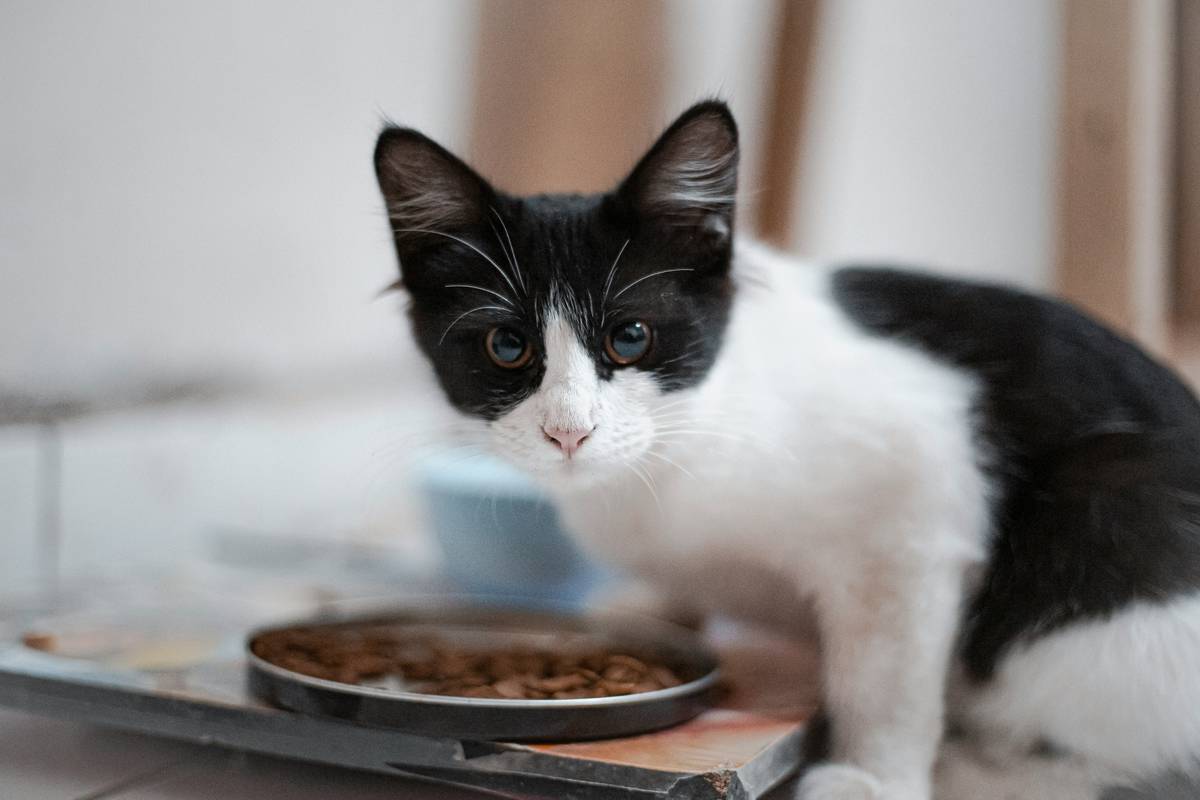
The first ingredient should be a clearly named animal protein: “chicken,” “salmon,” or “beef liver.” Avoid vague terms like “meat meal” or “animal by-products.” Transparency matters because nutrient density varies wildly between sources.
Verify Taurine Levels—The Non-Negotiable
Taurine isn’t optional. Without it, cats develop blindness and heart failure. Many dry foods lose taurine during high-heat processing—so if it’s not listed as a supplemented ingredient (ideally ≥0.2% in dry food), walk away.
Check for Synthetic vs. Whole-Food Vitamins
Synthetic vitamins (like dl-alpha-tocopherol) are cheaper but less bioavailable. Look for whole-food sources: “vitamin E (from sunflower oil)” or “vitamin A (from cod liver oil).” Your cat’s gut absorbs these far more efficiently.
| Ingredient Type | High-Quality Example | Poor-Quality Substitute | Nutrient Impact |
|---|---|---|---|
| Primary Protein | Cage-free chicken | Chicken by-product meal | +40% bioavailable amino acids |
| Fat Source | Salmon oil (omega-3 rich) | Vegetable oil blend | Better skin/coat; reduced inflammation |
| Vitamin Carrier | Kelp, nutritional yeast | Synthetic premix (dl-forms) | Higher absorption; fewer fillers needed |
The Industry Secret: How Some Brands Game Moisture Content to Inflate Protein Claims
Here’s something few talk about: protein percentages on dry food labels are calculated as-fed—including all that moisture-absorbing starch. But since dry kibble is only ~10% water versus raw food’s 70%, comparing them directly is misleading. A brand might boast “40% protein!” while actual meat content is shockingly low once adjusted for dry matter basis.
Smart move? Convert to dry matter: subtract moisture % from 100, then divide protein % by that number. Example: If a kibble is 10% moisture and 30% protein, its dry matter protein is 30 ÷ (100 – 10) = 33%. Now compare that to a wet food at 80% moisture and 10% protein: 10 ÷ 20 = 50%—far richer in real protein. Always run this quick math before trusting label claims.
Frequently Asked Questions
Is taurine naturally present in organic cat food?
Only if it contains sufficient fresh meat or organs. Plant-based “organic” formulas lack taurine entirely—supplementation is essential.
Can too much protein harm older cats?
No—healthy senior cats thrive on high-protein diets. Only those with diagnosed kidney disease may need moderation, under vet supervision.
Why do some organic foods list peas or lentils?
They’re cheap protein boosters that inflate numbers—but cats can’t utilize plant proteins effectively. It’s filler disguised as function.